How to play Pente Grammai (Five Lines)?
Pente Grammai, meaning “five lines,” is a dice and racing game that has been played in Ancient Greece since at least the 7th century BCE. Two players compete with five pieces each at the ten points where five parallel lines intersect; the central line is the “sacred line.” Since the original rules are lost, the version on the Oyun Treni website follows the reconstruction by the University of Fribourg’s Locus Ludi project and uses the same rule engine as our Pente Grammai mobile app. You play with the red pieces; you can compete against the computer at Easy, Medium, and Hard difficulty levels, or play against a friend on the same device.
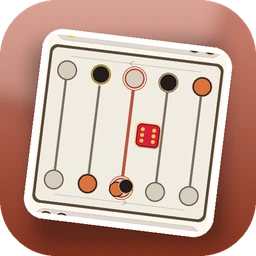
- There are five parallel lines on the board; each line has a dot at each end (for a total of ten dots). The middle line is the sacred line.
- Each player has five pieces waiting off the board. Players take turns rolling a single die; Red (you) rolls first.
- The pieces move counterclockwise: from left to right along your own row, then across to the opponent’s side and back along their row to the sacred point on their side—a total of eight steps. If it is possible to place a piece on the board, you must do so.
- A single stone stands at one point; you cannot land on your own stone, but you can jump over the stones. At both ends of the sacred line, each side can place as many stones as they wish, and the stones there are safe.
- Under the "send-back" rule, if you land exactly on top of an opponent's piece, that piece is removed from the board and starts over; under the "race" rule, you cannot do this.
- You can only enter the opponent’s sacred zone with a perfect roll. If there is no legal move, it’s the next player’s turn. The first player to move all five of their stones to the sacred zone wins.